


I’ve said it before, and I’ll keep saying it: The best lobbyist this industry has is a dealer. A congressional staffer can skim a white paper in 30 seconds. What they remember is a dealer telling them what a bill does to their employees, their customers and their town.
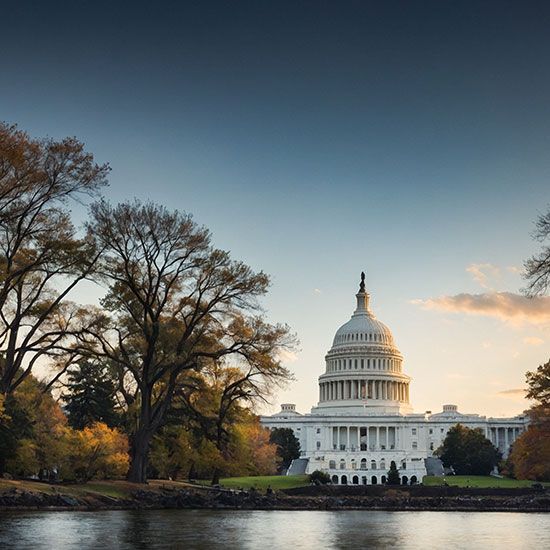
That’s why nine of us went to the NADA Washington Conference, Sept. 14-16, and spent two days on Capitol Hill making our case face to face.
Representing Louisiana were Patton Fritze, our chairman; Ryan LeBlanc, treasurer; Mark Hebert, NADA state director; Brett Barker, NADA state PAC chairman; Keith Rutherford, ATD Isuzu line representative; John Connor Flick, our NextGen representative; Katherine Carver, director of communications and events; Claude Reynaud, general counsel; and me.
We sat down with Congresswoman Julia Letlow and Congressman Cleo Fields, as well as the chiefs of staff for Speaker Mike Johnson and Congressman Clay Higgins. They were all clear on two things: They want to hear directly from you about what’s affecting your businesses. They recognize how much franchised dealers matter, not just nationally but in your hometowns and across Louisiana.
The foremost topic of discussion throughout the whole trip was keeping vehicles and technology controlled by China and other foreign adversaries out of the American market. It matters to every rooftop in Louisiana. We also got a straight read on November from one of the country’s best election analysts. Let’s dive in more.
The Connected Vehicle Security Act
The Connected Vehicle Security Act of 2026 was introduced by Senator Bernie Moreno (R-Ohio) and Senator Elissa Slotkin (D-Michigan). In the House, the bill is carried by Congresswoman Debbie Dingell (D-Michigan) and Congressman John Moolenaar (R-Michigan), chairman of the House Select Committee on the Chinese Communist Party. You’d be hard-pressed to find anything more bipartisan moving in Washington right now.
This bill would keep vehicles built or controlled by China, Russia, North Korea and Iran out of this country. It bans the import, manufacture and sale of those vehicles, along with connected software and hardware tied to those countries. It also writes into law, and expands, the connected vehicle rule the U.S. Department of Commerce finalized in January 2025, so a future administration can’t undo it with the stroke of a pen.
Senator Moreno and Congresswoman Dingell both spoke at the NADA Washington Conference. Moreno spent his career as a dealer before he ran for office, and it shows when he talks about this issue. He told CBT News in July that letting these vehicles in would be “committing industrial suicide, and that’s exactly what this bill is preventing.” Congresswoman Dingell has been in the auto industry’s corner as long as anybody in Congress. She and Chairman Moolenaar have been blunt: Chinese automakers win on forced labor, government subsidies and unfair trade, and their vehicles send data back to China. As she said, “I will never give up our leadership to China or any other country in the world.”
Where It Stands
The Senate bill, S. 4429, cleared the Senate Commerce Committee unanimously on July 22. The sponsors tried to pass it by unanimous consent in late September, and Senator Rand Paul (R-Kentucky) objected. Under Senate rules, one objection is enough to block it. The sponsors are negotiating with him, and the next chance comes when the Senate returns after the election. The House companion, H.R. 8730, was filed May 11 and still has to clear three House committees. Senator Moreno has said that the job now is to get the House and Senate on the same page. If it doesn’t pass by the end of the year, it starts over.
Why It Matters to Your Store
Look at what’s happened in Europe, Mexico, Australia and South America, and what is happening in Canada: Chinese brands backed by government money have grabbed market share quickly, and companies without that kind of backing can’t compete on price. Every one of you has millions tied up in facilities, inventory and people. That investment depends on a fair fight. NADA President and CEO Mike Stanton has driven these vehicles and doesn’t knock their quality or their price; his concern, and mine, is that they aren’t competing on a level playing field.
There’s also a national security problem. Today’s vehicles carry cameras, microphones, GPS and sensors, and they communicate with external networks and receive software updates over the air. Chairman Moolenaar calls them “rolling data collection devices.”
Chinese law requires that country’s automakers to cooperate with its state security and intelligence services when asked. That would give a foreign adversary a window into where Americans drive and what our roads, ports and bases look like, plus a way to push code to vehicles on our highways. The information on the folks who buy from you has no business ending up in Beijing.
There’s still work to do on the language. In committee, Commerce Chairman Ted Cruz warned that the bill’s 15% Chinese ownership test could sweep in Mercedes-Benz, and that the bill won’t get through the full Senate with that test in it. Two Chinese investors, state-owned BAIC and Geely founder Li Shufu, together own just under 20% of Mercedes. Senator Moreno, who owned a Mercedes-Benz dealership outside Cleveland and whose son is still a Mercedes dealer, said that isn’t the intent and that Mercedes would have until 2030 to make changes or seek a waiver.
Volvo is a bigger problem on paper. China’s Geely owns nearly 80% of it. Commerce let Volvo keep selling under the current rule after talks over how it handles data, but it wouldn’t authorize Volvo’s sister brand, Polestar, which is also Geely-owned, so Polestar will stop selling new cars in the U.S. starting with the 2027 model year. Moreno told dealers worried about their franchises, “Your franchise is not going to go away. Volvo will figure it out. Mercedes will figure it out.” Several brands our members sell have Chinese investors or build some models in China, so we’ll be watching the final language closely.
LADA supports this bill the same way NADA does: We back its goals, but the ownership issues for Mercedes-Benz and Volvo have to be worked out in the final bill, because we have Louisiana dealers selling those brands. NADA is working with lawmakers and automakers on the final language so dealers don’t get caught in the crossfire. And if a Chinese brand ever comes here on fair terms through the franchise system, NADA has said it would stand behind the dealers who sell it, just like any other brand. What we won’t accept is anybody going around the franchise system.
The Elections
At the Washington Conference, we also heard from Dave Wasserman, senior editor and elections analyst at the Cook Political Report. There’s not a more respected numbers man in the business, and what he told the room lined up with what you’ve been reading.
The House
Dave’s read was that the House is very likely to change hands, and Cook’s ratings since then point even harder that way. On Oct. 9, Cook moved 18 House races toward Democrats and pegged them at 224 seats to 234. It takes 218 for a majority, and by that math, Democrats needed only about one in five of the toss-ups to get there. A week later, on Oct. 16, Cook moved 11 more races toward Democrats, many of them in districts President Trump carried by double digits, although Republicans are still favored in eight of the 11.
The real question is by how much. Dave’s point was that even a strong Democratic year may not look like 2018, because the map has fewer swing seats than it used to. By Cook’s count, the number of truly competitive districts fell from 87 to 77 after redistricting.
Redistricting itself can cut both ways. Ten states redrew their maps mid-decade. Republicans came out ahead on paper, but by less than many expected. Indiana’s Senate voted its map down, South Carolina’s effort fell flat, and California and Utah went the other direction. In a year like this, some of those extra seats may not hold.
Louisiana was part of that story. After the Supreme Court’s Callais decision in April, the Legislature drew a new map with one majority-Black district instead of two.
The Senate
The Senate is a different animal. Republicans hold 53 seats, so Democrats need a net gain of four. A year ago, that looked out of reach. Now Cook has North Carolina leaning Democratic and six Republican-held seats rated as toss-ups: Alaska, Iowa, Kansas, Maine, Ohio and Texas. Yes, you read that right: even Texas is in play. It hasn’t sent a Democrat to the Senate in more than 30 years, and in August, Cook moved the Paxton-Talarico race to a toss-up.
Here at home, the Senate seat is open. Senator Bill Cassidy finished third in the May Republican primary, and Congresswoman Letlow beat State Treasurer John Fleming in the June runoff, so the November race is between Letlow and Jamie Davis, the Democratic nominee. Cook rates it as solid Republican.
Louisiana’s House Races
Election Day is Tuesday, Nov. 3. In Louisiana, that’s the general election for U.S. Senate and an open, all-party primary for all six House seats under our new map. Any House race where nobody clears 50% goes to a runoff on Saturday, Dec. 12.
The 5th and 6th Districts are the races to watch. Both are open seats, both lean Republican under the new map, and both drew a crowd.
The 5th opened up when Congresswoman Letlow ran for the Senate. Six Republicans are running, including state Senator Stewart Cathey Jr., state Representative and House Majority Leader Michael Echols, state Representative Gabe Firment and Board of Regents Chair Misti Cordell. State Representative Pat Moore is among three Democrats in the race.
The 6th District was redrawn after Callais to favor a Republican, and Congressman Cleo Fields is not on the ballot. State Senators Rick Edmonds and Blake Miguez are the biggest names among six Republicans. Pat Forbes, a longtime state official endorsed by former Governor John Bel Edwards, is one of three Democrats, and there’s a Libertarian too.
With nine and 10 names on those ballots, it’s hard for anybody to clear 50% on Nov. 3. LSU’s Robert Hogan has pointed out that with this many Republicans splitting the vote, Democrats see an opening. Don’t be surprised if one or both go to a Dec. 12 runoff, and if the House majority comes down to a handful of seats, Louisiana could be one of the last places it gets settled.
What It Means for Louisiana
This is the part I want every dealer to think about, whoever you vote for: Right now, two Louisianians, House Speaker Mike Johnson and Majority Leader Steve Scalise, hold the two most powerful jobs in the U.S. House. For a state with six House seats, that’s an outsized amount of clout. The Speaker and the Majority Leader decide what comes to the floor and when.
If the House flips, those jobs go to the other party, and Congressman Troy Carter, if he’s reelected, would be serving in the majority. Despite the unfortunate partisanship in Washington, our delegation works well together, and that won’t change no matter who holds the gavel. A change in leadership still resets the calendar. That’s why the weeks right after Nov. 3 matter so much for a bill like the Connected Vehicle Security Act, and it’s why LADA works both sides of the aisle. Relationships with both parties are how we protect your business no matter who’s in charge.
Here’s my ask: The lame-duck session after the election is this bill’s last shot this year, and it comes with a short calendar and a long to-do list. If you know your congressional representative or one of our senators, give them a call that week and tell them you want the Connected Vehicle Security Act passed this year, with ownership language that doesn’t catch the brands our members currently sell. A call from a dealer back home carries more weight than anything I can send; if you want talking points, email me at cmcmahen@lada.org.
In closing, our trip to this year’s NADA Washington Conference reinforced what I said at the top: When dealers show up and tell their story, Washington listens. What gets decided there in the next few months, both on this bill and at the ballot box, will reach every showroom in Louisiana, and LADA will keep working both sides of the aisle to make sure your voice is in the room.
None of this happens without our members. Thank you for the support that makes it possible for LADA to show up in Washington and speak on your behalf. We are proud to represent you.